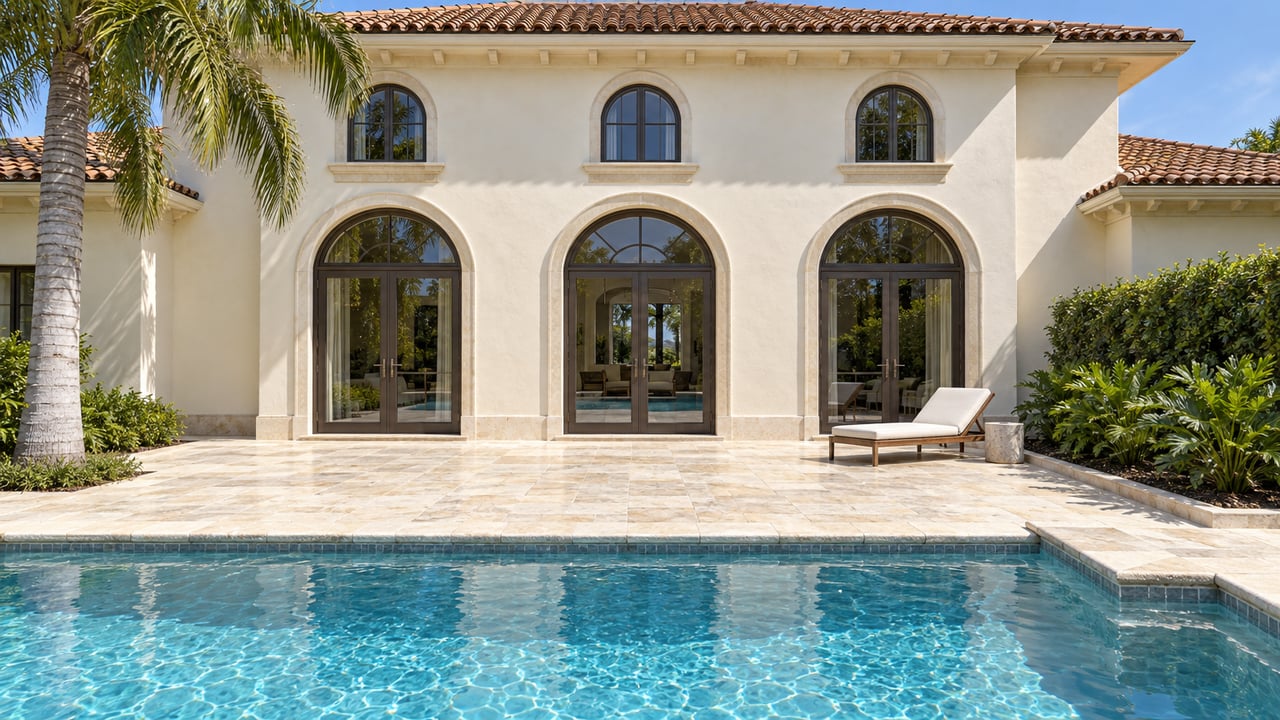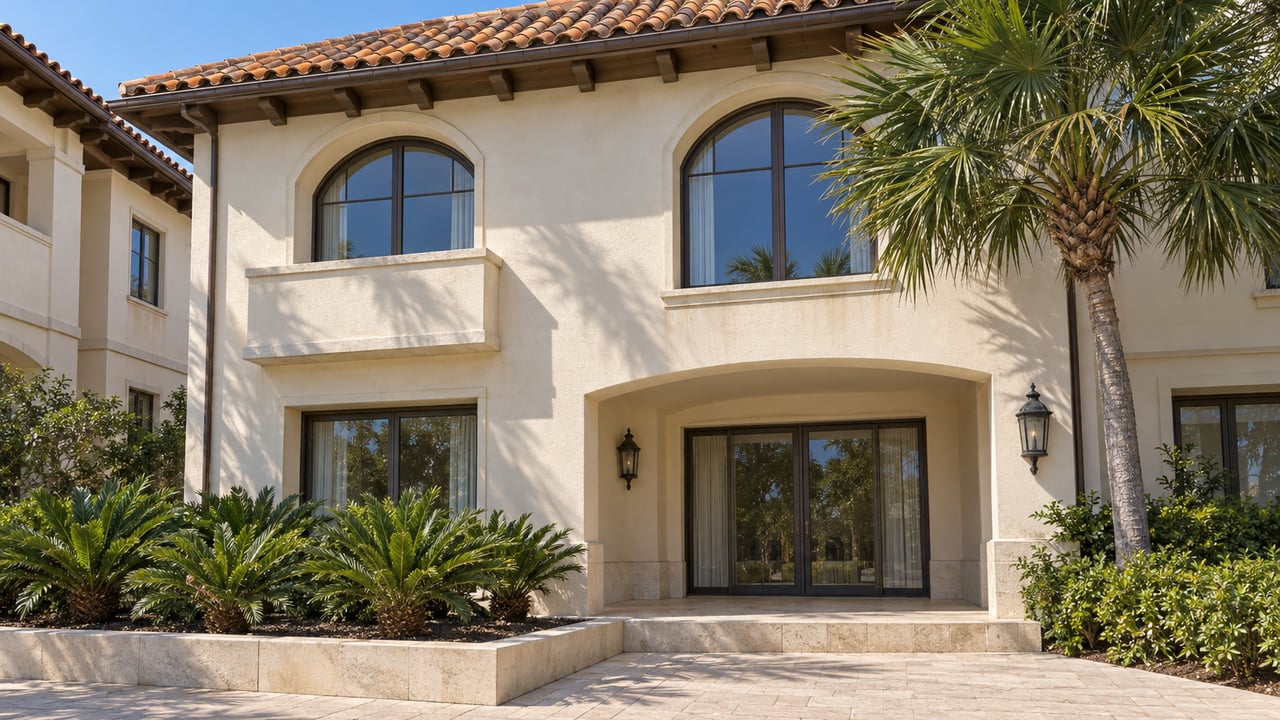
On August 26, 2026, the board of Calais at Pelican Bay ran its meeting past two hours. Committee reports were pushed to the next session. Before that, the board unanimously approved a one-time special assessment of $15,000 per unit, payable in two $7,500 installments due October 1, 2026, and January 1, 2027. The minutes say it was recommended to pay for work identified in the association's SIRS, milestone inspection and reserve study reports, plus items that "have come up recently as life safety issues." At the same meeting, the board approved three restoration change orders totaling $274,000. It also voted to seek an additional $200,000 loan from an owner to keep structural repairs going.
None of that appears on a listing. Over the same months, the broader Naples condo market went back to telling a recovery story. In Pelican Bay today, a condo's real price is set building by building, in reserve documents that sit outside the listing.
The Seven Days That Decide the Real Price
Florida law entitles a resale condo buyer to a specific set of documents, delivered at the seller's expense. The list includes the inspector-prepared milestone inspection summary where one applies, and the association's most recent Structural Integrity Reserve Study, or a statement that it has not been completed. Section 718.503 of the Florida Statutes sets out two paths. If the buyer received those documents more than seven days before signing the contract, the contract acknowledges that. If not, the buyer can cancel in writing within seven days after signing and receiving them. In both cases, Saturdays, Sundays and legal holidays are not counted. A waiver of the cancellation right has no effect, and closing can be extended by up to seven of those days.
The timing matters because an offer is usually built on the asking price, comparable sales and the dues on the listing. The documents that show what the building owes its own future may come before the contract or during that seven-day window. For a Pelican Bay buyer, getting them early enough to factor into the price is the friction that counts.
One Association's Paper Trail, in Order
Calais at Pelican Bay is a 131-unit association whose documents are publicly posted. Taken in sequence, they show how a reserve study turns into an owner's bill.
| Date | Document | What it says |
|---|---|---|
| December 20, 2024 | SIRS by Dreux Isaac & Associates | Current reserve funding of $640,521 against a recommended $1,766,131, a 175.73% increase; estimated beginning reserve balance of negative $275,533 |
| March 19, 2025 | Board minutes | Separate SIRS reserve account approved at the 2025–26 budget meeting |
| 2026–27 adopted budget | Budget, April 1, 2026 to March 31, 2027 | Reserve assessments of $1,179,000, a $506,000 special assessment line, and $25,200 for line-of-credit interest |
| April 22, 2026 | Board minutes | More post-tension cable repairs in Buildings D and F; major restoration expected to finish around June 1; walkway tile replacement postponed for financial reasons |
| August 26, 2026 | Board minutes | $15,000-per-unit special assessment approved; motion to seek a $200,000 owner loan |
The SIRS counted 201 reserve components with a combined current cost of $10,778,420, and it put the fully funded ideal reserve balance at $5,346,585. An engineering evaluation in the association's records says restoration work has been underway since 2022. That work includes concrete restoration, post-tension cable repairs, painting, stucco repairs and waterproofing.
The budget turns those findings into dues. Reserve assessments of $1,179,000 come to about $9,000 per unit on average, up from roughly $4,900 under the $640,521 the study recorded as current funding. Before any special assessment, adopted 2026–27 dues run $20,549 a year for A, B and G units and $20,692 for C, D, E and F units. Owners who have not fully paid an earlier special assessment pay $26,049 and $26,192, about $5,500 more. The August $15,000 assessment was approved after that budget was adopted, and the minutes record it as a separate one-time charge.
All of this reflects an association doing the work the law now requires, and posting the paper trail where owners and buyers can read it. It is one building's record. It is not a forecast for every Pelican Bay address, since each association's reserve position is its own.
Why the Market Numbers Point the Other Way
The market numbers look good, and they are accurate. NABOR's August 2026 statistics cover the Naples Beach area, ZIP codes 34102, 34103 and 34108, which includes Pelican Bay. From January through August 2026, condo sales there rose 28.5% from the same period of 2025, to 806 closings. Condo inventory in August 2026 was 547 units, down from 732 a year earlier. Months of supply fell from 10.9 to 6.3, and days on market for August sales dropped from 162 to 117. Over the same eight months, the median closed condo price slipped 3.9%, to $1,091,250.
More sales at slightly lower prices fits a market that has absorbed the reserve requirements. Local reporting explains it in those terms. In Naples Press earlier this year, Naples Realtor Matt Brown said, "Buyers waited for the dust to settle," and added that with the SIRS and milestone requirements "in the rearview mirror, buyers feel much more comfortable moving forward." The same article cites the Gulf Shore Association of Condominiums as reporting that 83% of the 245 buildings identified by the city's building department had completed the reports by mid-2025.
Finishing a report is the first step, and paying for what it found comes afterward. A median blends buildings that have closed their reserve gap with buildings still collecting for it, so a unit in each can trade at similar prices while carrying very different obligations. Calais finished its study in late 2024 and still approved its largest per-unit assessment in August 2026. The sales data shows that demand came back.
The Law Lets an Association Spread the Bill
Part of what keeps these costs out of view is that state law now offers several ways to pay them. HB 913 took effect July 1, 2025. It allows required structural reserves to be funded through regular assessments, a special assessment, a line of credit or a loan, and it requires those funding arrangements to appear in financial statements and in disclosures to prospective purchasers. For budgets adopted on or before December 31, 2028, an association that completed a milestone inspection within the previous two calendar years may temporarily pause or reduce reserve contributions for up to two consecutive annual budgets. The money must go to repairs that inspection recommended, and the board needs approval from a majority of the association's total voting interests. Contributions can resume only after a new SIRS is performed. An association with a milestone inspection due on or before December 31, 2026, may complete its SIRS alongside it, but no later than that date. The full text is in Chapter 2025-175, Laws of Florida.
Calais's records show several of these tools in use at once. There are higher reserve assessments, a budgeted special assessment, line-of-credit interest, a second special assessment and a proposed owner loan. In buildings that rely on borrowing or paused contributions, the cost does not go away. It moves to later budgets, and later budgets belong to whoever owns the unit then.
The Numbers to Total Inside the Window
In Pelican Bay, the documents a buyer receives before or during the review period are where the real price can be found. In the Calais example, these figures were sitting in plain sight:
- Base dues and special assessment status. Calais's budget lists two dues figures, one for owners whose earlier assessment is fully paid and one for owners who are still paying it.
- Unpaid installments. The second $7,500 Calais installment is due January 1, 2027.
- Funded percentage and starting balance. Calais's SIRS reported a fully funded percentage of negative 5%.
- Debt service. Any loan or line-of-credit interest in the operating budget, such as Calais's $25,200.
- The Pelican Bay Foundation assessment. This is billed separately from condo dues. For October 1, 2026, through September 30, 2027, the Foundation's estoppel form lists $3,435 a year, or $858.75 a quarter, up from $3,295 for fiscal 2026. The rate is published by the Pelican Bay Foundation.
- Postponed work. Look for items deferred for financial reasons, such as Calais's walkway tile replacement, because deferred work stays on the list.
This is general information, not legal, tax or financial advice. How the statute, an assessment or a contract term applies to a specific purchase is a question for a Florida real estate attorney or another qualified professional.
A Few Questions Buyers Ask
Who pays a special assessment approved before closing? That depends on the contract and the association's records, so it is a question to raise with your attorney before the review window closes. In the Calais example, the budget sets a separate dues schedule for owners whose earlier special assessment is fully paid.
Does a recent SIRS mean the costs are behind a building? No. Calais's study was run in December 2024, and its largest per-unit assessment came in August 2026.
Are more listings coming before season? Naples Beach condo inventory was 547 units in August 2026, down from 732 a year earlier.
Whether you are weighing a Pelican Bay condo or preparing to sell one in a building mid-restoration, Chiodo Group reads the reserve study, budget and minutes together with you, so the price you agree to includes what the building owes. Sellers can start with an Instant Home Valuation, and we will factor in what the association's documents will show a buyer.